
Thames History: From Ngāti Maru Land to the 1867 Gold Rush
Thames history as a town begins with gold. Prospector William Hunt made the first major find on 10 August 1867, and Grahamstown, later part of Thames, was founded the following year, partly on land gifted by Ngāti Maru chiefs. You can still see that history today at the Thames School of Mines, a Category 1 historic place, at the Goldmine Experience, and in the archives of The Treasury.
Key takeaways
- The first major gold discovery at Thames was on 10 August 1867, in the Kuranui Stream.
- Ngāti Maru chiefs gifted land in the new settlement of Grahamstown in 1868, which later became the School of Mines site.
- The School of Mines opened in 1886 and is now cared for by Heritage New Zealand.
- You can tour a real stamper battery and goldmine, and research family history at The Treasury.
Who lived at Thames before the gold rush?
Heritage New Zealand records that the land now occupied by the School of Mines was part of an urupā (burial ground) associated with three pā: Tarakonaiti, Pukehimana and Pukehinau. In 1868 Ngāti Maru chiefs gifted it to the Wesleyan Church for a place of worship in the newly founded settlement of Grahamstown.
That gift came with a condition. When the Wesleyans transferred the site for a School of Mines in 1885, they did so against the wishes of Ngāti Maru, who had petitioned Parliament in 1877 that the land be used only for the worship of God. Part of the site was registered in 2004 as Te Apuranginui wāhi tapu, a place sacred to Māori.
When did the Thames gold rush start?
The Goldmine Experience dates the first major discovery to 10 August 1867. Prospector William Hunt found gold in a waterfall in the bed of the Kuranui Stream. That claim became the Shotover mine, which produced over 102,353 oz of bullion.
| Year | What happened |
|---|---|
| 1867 | William Hunt makes the first major gold find in the Kuranui Stream (10 August) |
| 1868 | Ngāti Maru chiefs gift land in newly founded Grahamstown to the Wesleyan Church |
| 1868 to 1871 | The bonanza years, with gold production topping one million pounds sterling at its peak |
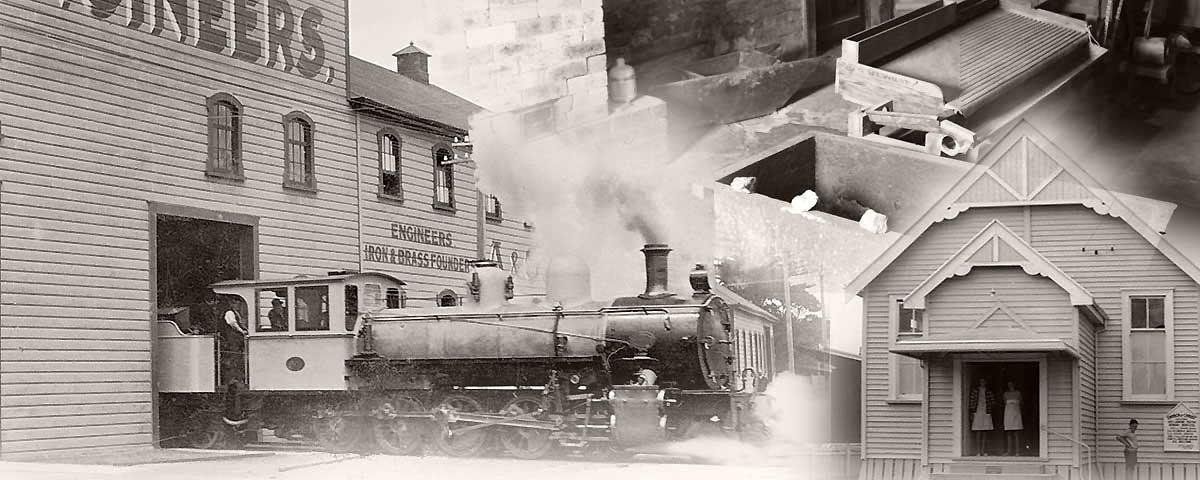
| 1871 | Engineers A. & G. Price move their foundry to Grahamstown to build mining machinery |
| 1886 | The Thames School of Mines opens |
| 1897 | The Big Pump is installed at the Queen of Beauty Shaft |
| 1901 | The School of Mines mineralogical museum opens to the public |
| 1979 | The NZ Historic Places Trust buys the School of Mines buildings |
According to the Goldmine Experience, official figures record a total yield of 2,327,619 oz of bullion from the Thames mines. Heritage New Zealand describes Thames as the main mining centre for the Coromandel quartzfields, whose gold had to be extracted with advanced techniques.
The engineering firm A. & G. Price moved to Grahamstown in 1871 to build crushers, boilers and stamper batteries. In 1897 it supplied 10 Lancashire boilers for the Big Pump at the Queen of Beauty Shaft, then considered the largest pump in the southern hemisphere.
What was the Thames School of Mines?
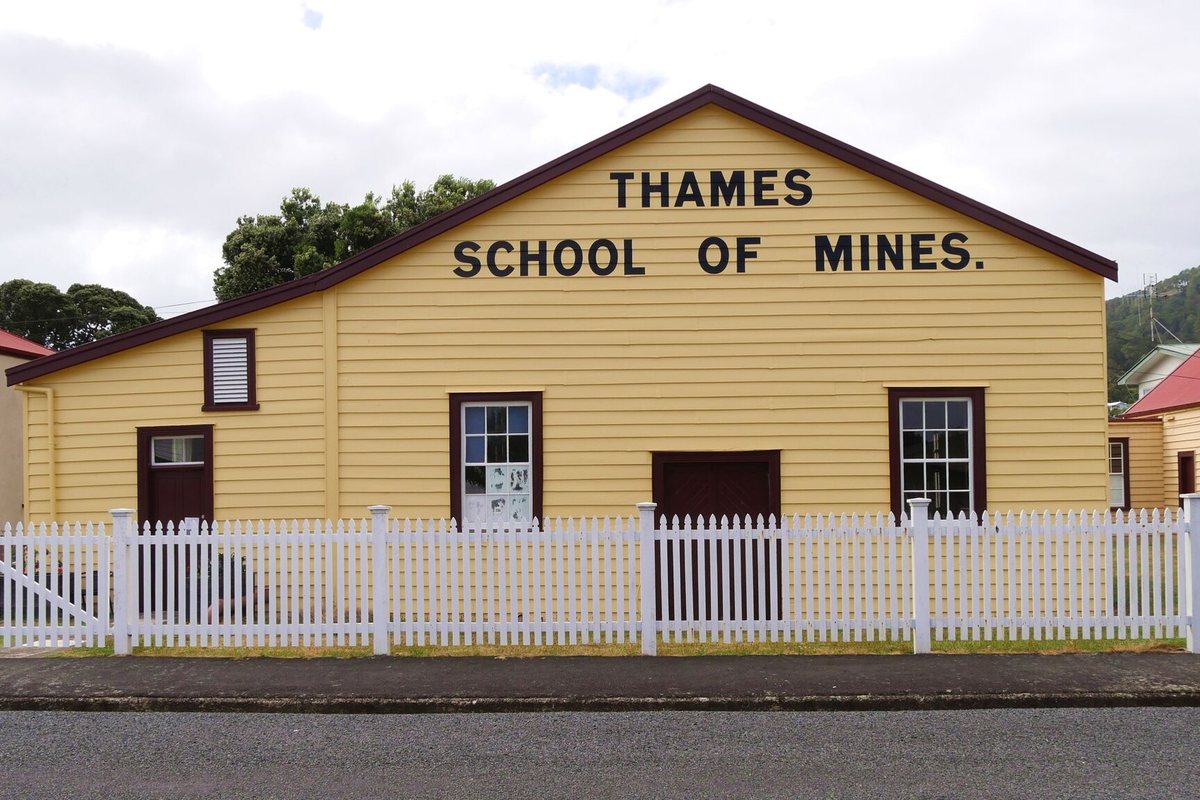
The Thames School of Mines opened in 1886 as one of about 30 mining schools set up around New Zealand to support the goldfields, encouraged by the Minister of Mines, William Larnach. It taught geology, mine management, engineering and other practical skills to high school and adult students. Women first attended in 1887.
- The buildings: lectures began in the 1869 Wesleyan Sunday School building. An Experimental Metallurgical Works, with a two-stamp battery, roasting furnace and water wheel, was added in 1886, and also crushed miners' ore to earn income.
- The museum: a large mineralogical museum opened to the public in 1901.
- Later years: the school revived briefly in the 1930s, closed in the 1950s, and in 1979 the NZ Historic Places Trust bought the buildings.
Heritage New Zealand describes it as the largest mining school in the country and a rare, well-preserved example of its type, listed as a Category 1 historic place (List No. 132). It is on Cochrane, Brown and Davey streets. Listed opening hours differ between sources, so check Heritage New Zealand's visitor page before you go.
Can you visit a real goldmine in Thames?
Yes. The Goldmine Experience, on the corner of Moanataiari Road and State Highway 25, runs guided tours through an operating 19th-century stamper battery and into one of the richest goldmines of its time. A self-guided section has a photographic museum, a video, mining relics and steam-powered machines, and you can try gold panning. The battery was restored over 50 years of voluntary work by the Hauraki Prospectors Association and supporters.
| Season | Dates | Hours |
|---|---|---|
| Summer | 26 December to 26 April | Daily, 10am to 4pm (last tour 3.30pm) |
| Winter | 27 April to 24 December | Weekends, public and school holidays, 10am to 1pm |
It is closed on Christmas Day and Good Friday. Our Goldmine Experience guide has more on what to expect.
Where can you research Thames history?
The Treasury, also known as Te Whare Pātaka, is a heritage research centre and archive at 705 Queen Street. It specialises in family records, and collects papers on the people, organisations and businesses of the whole Coromandel Peninsula and Hauraki, including Paeroa, Waikino, Waihi and the Hauraki Plains.
It is housed in two buildings side by side. One is the Thames Carnegie Library, built in 1905, which the district council refurbished in 2007 and reopened as The Treasury in 2009. The other is a purpose-built modern archive.
The Thames Museum, Te Whare Taonga o te Kauaeranga, is at 503 Cochrane Street. Listed opening hours differ between sources, so check locally before you visit.
How can you see goldfield Thames on foot?
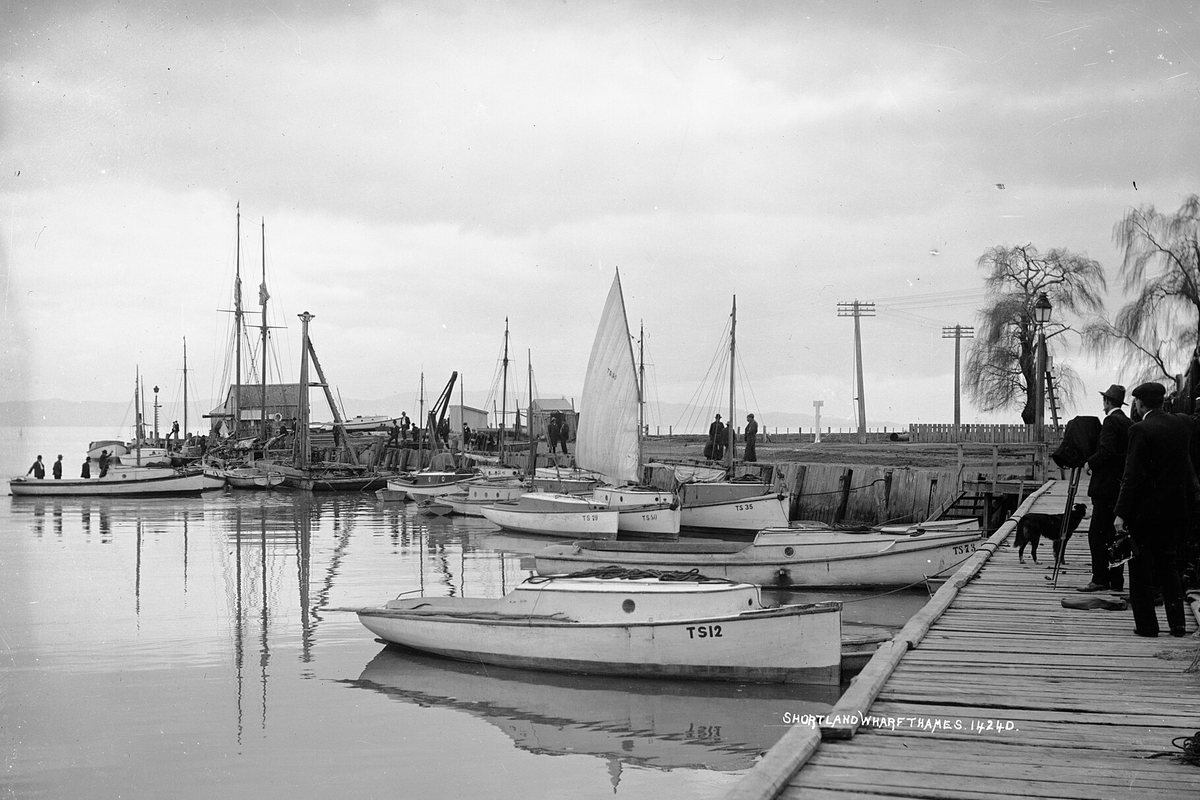
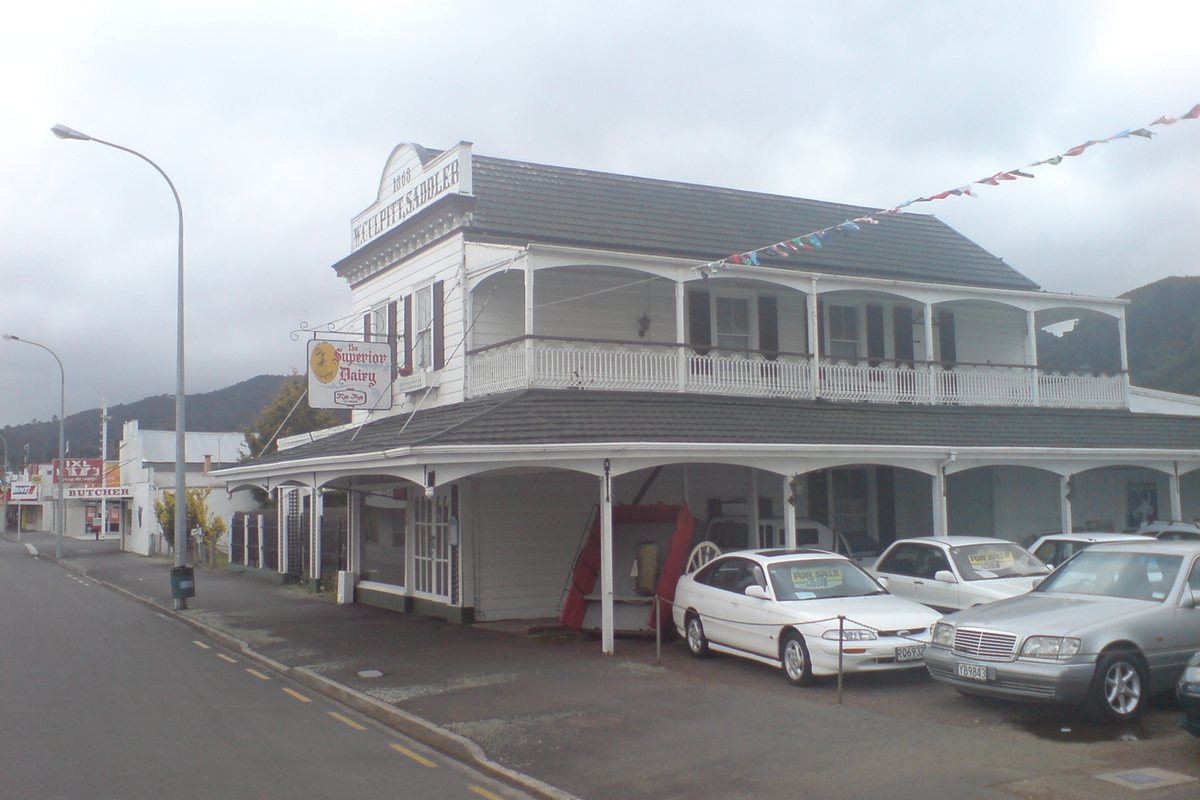
Walk the Grahamstown end of Pollen Street, where timber shopfronts from the goldfield era still line the street, then head to the waterfront. The Thames Coastal Walkway starts at Shortland Wharf and passes the old pilings of the Burke Street Wharf. Our guide to Thames shops covers the heritage end of Pollen Street.
Make a day of it with other things to do in Thames, or stay over: see where to stay in Thames.
Frequently asked questions
When did the Thames gold rush start?
The first major find was made on 10 August 1867, when prospector William Hunt found gold in a waterfall in the Kuranui Stream, according to the Goldmine Experience. The bonanza years followed from 1868 to 1871.
What is the Thames School of Mines?
It was a mining school that opened in 1886 and became the largest in New Zealand, teaching geology, mine management and engineering. Heritage New Zealand has owned the buildings since 1979 and lists them as a Category 1 historic place.
Can you go inside a goldmine in Thames?
Yes. The Goldmine Experience, on the corner of Moanataiari Road and State Highway 25, runs guided tours through a 19th-century stamper battery and into an old goldmine, with gold panning and a photographic museum.
Where can I research Thames family history?
The Treasury, a heritage research centre and archive at 705 Queen Street, collects family, business and community records for the Coromandel Peninsula and Hauraki. It is housed partly in the 1905 Thames Carnegie Library.
Who are the tangata whenua of Thames?
Heritage New Zealand records that Ngāti Maru chiefs gifted the School of Mines land in 1868 and that the site is particularly important to Ngāti Maru. Heritage New Zealand also links the site to three pā: Tarakonaiti, Pukehimana and Pukehinau.
Sources: Heritage New Zealand Pouhere Taonga, School of Mines Buildings (List No. 132); Goldmine Experience; The Treasury. Checked 14 October 2026.