
Thames Coastal Walkway: A Guide to the Waterfront
The Thames Coastal Walkway is a flat 3.5 km path along the Thames waterfront, running from Shortland Wharf at the southern end of town to Kuranui Bay in the north. On the way it passes old wharves, a bird hide in the mangroves, the old Grahamstown Railway Station and the Thames School of Mines. You can walk it, cycle it or take a mobility scooter, and dogs are welcome on a lead.
Thames Coastal Walkway at a glance
| Detail | Thames Coastal Walkway |
|---|---|
| Length | 3.5 km one way, 7 km return |
| Start | Shortland Wharf, Queen Street |
| Finish | Kuranui Bay Reserve |
| Terrain | Flat, well-developed path |
| Who can use it | Walkers, cyclists, rollerbladers, mobility scooters, skateboards |
| Dogs | On a lead; off-leash dog park at Moanataiari |
| Facilities | Barbecue, toilets and parking at Kuranui Bay |
| Mid-point parking | Victoria Park |
Where does the Thames Coastal Walkway start and finish?
The walkway starts at Shortland Wharf on Queen Street, at the southern end of Thames, and finishes at Kuranui Bay Reserve on the northern edge of town. Nothing forces you to do it in one go. The path runs close to the town centre the whole way, so you can cut back into town at plenty of points for food or a detour, or loop back early.
The route, stop by stop
Walking south to north, this is the order you meet things in:
- Shortland Wharf, through the boatyard.
- Along the stopbank past the mangroves to Danby Field.
- Behind the Goldfields Shopping Centre and Pak'nSave into Victoria Park.
- The Karaka Bird Hide, the Thames Small Gauge Railway and the old Grahamstown Railway Station.
- The Thames School of Mines, across the road from the station.
- North past the Croquet Club, then around the capped former landfill to Moanataiari and the off-leash dog park.
- The pilings of the old Burke Street Wharf.
- Along the top of the stopbank to Kuranui Bay Reserve.
Shortland Wharf and the Thames waterfront
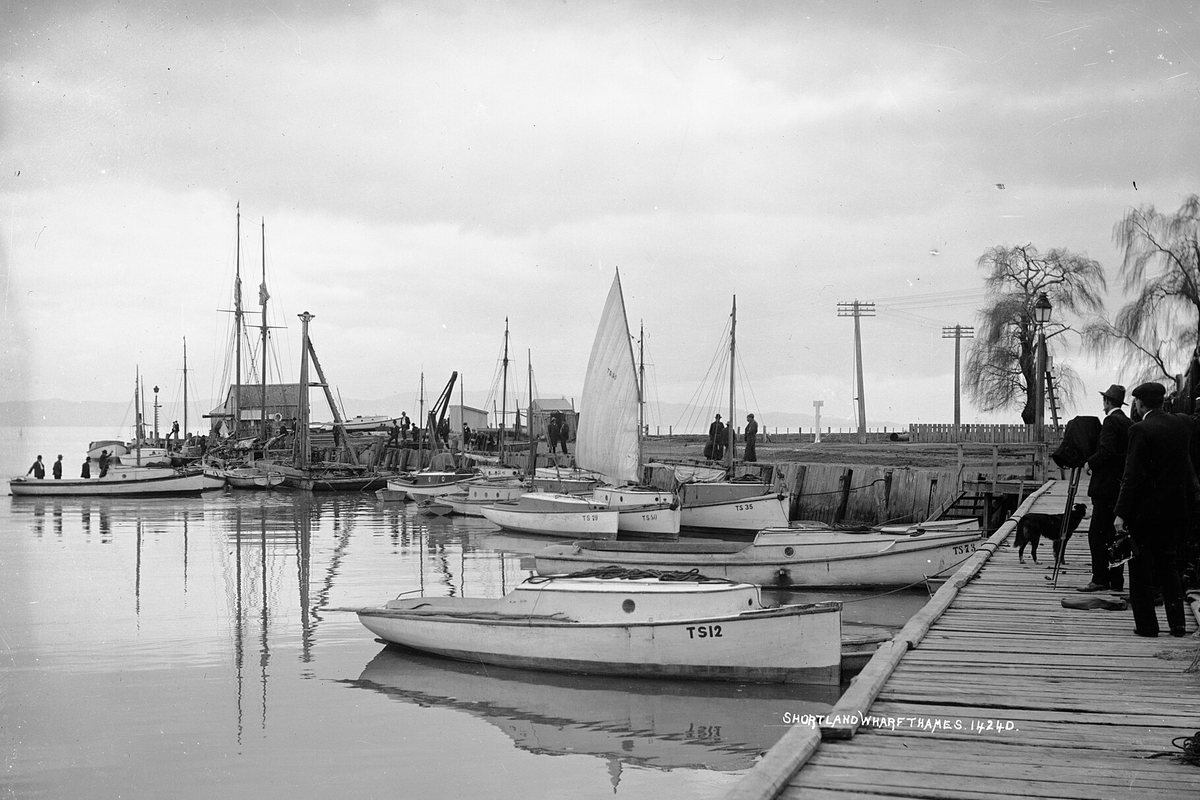
The walk begins where Thames has always met the water. Shortland, founded in 1867, was the first of the two gold-rush settlements that grew into the town. It is also the easiest place to start with a coffee: The Wharf Coffee House & Bar sits on the historic wharf, and Thames Wholesale Fisheries next door sells fish and chips. For more places to eat, see our Thames food and drink guide.
Much of the ground under your feet is newer than it looks. According to the Thames Business Association, the old foreshore stopped at Beach Road, and the walkway runs over reclaimed land built up from gold-mining tailings. Before any of that, this stretch of foreshore was a Māori customary fishing ground.
Victoria Park: bird hide, railways and the School of Mines
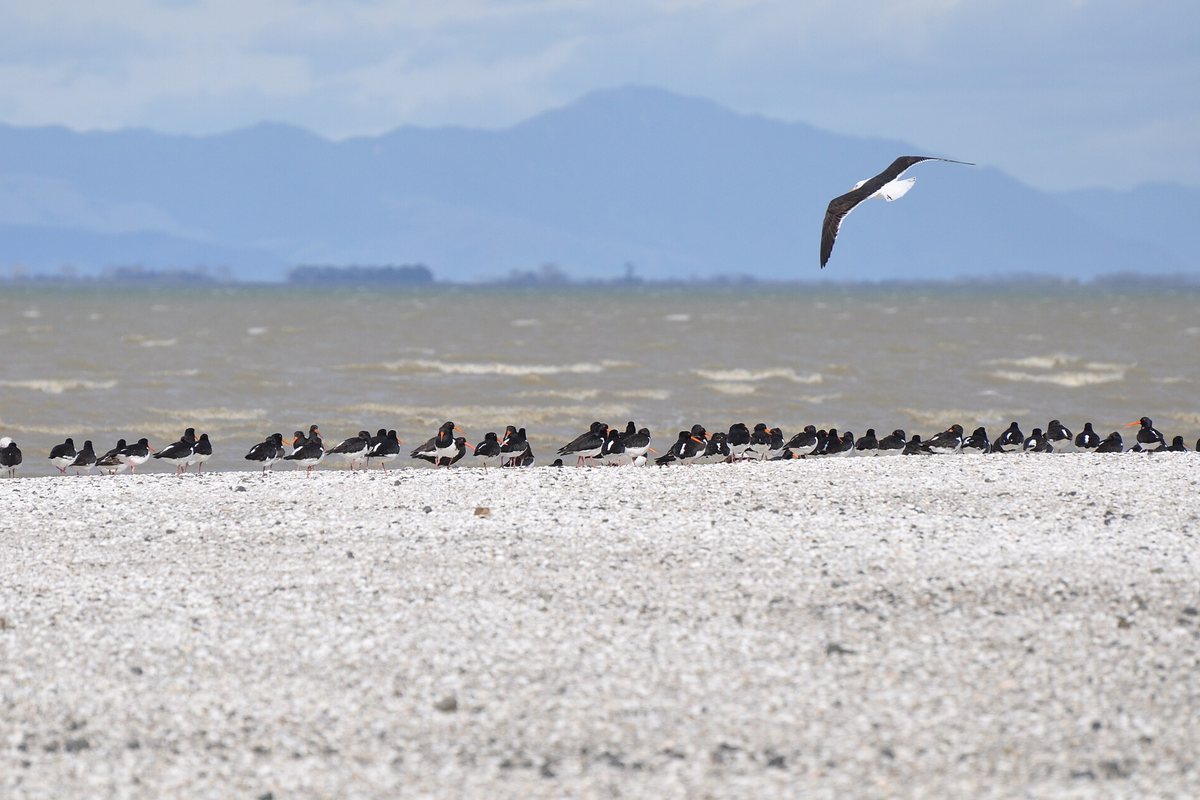
Victoria Park, in the middle, is the place to park if you only want to walk part of the route. Forest & Bird's Karaka Bird Hide is open to the public at all times and is reached by a boardwalk through the mangroves near the Goldfields Shopping Centre on Brown Street. It gives close-up views of the waders.
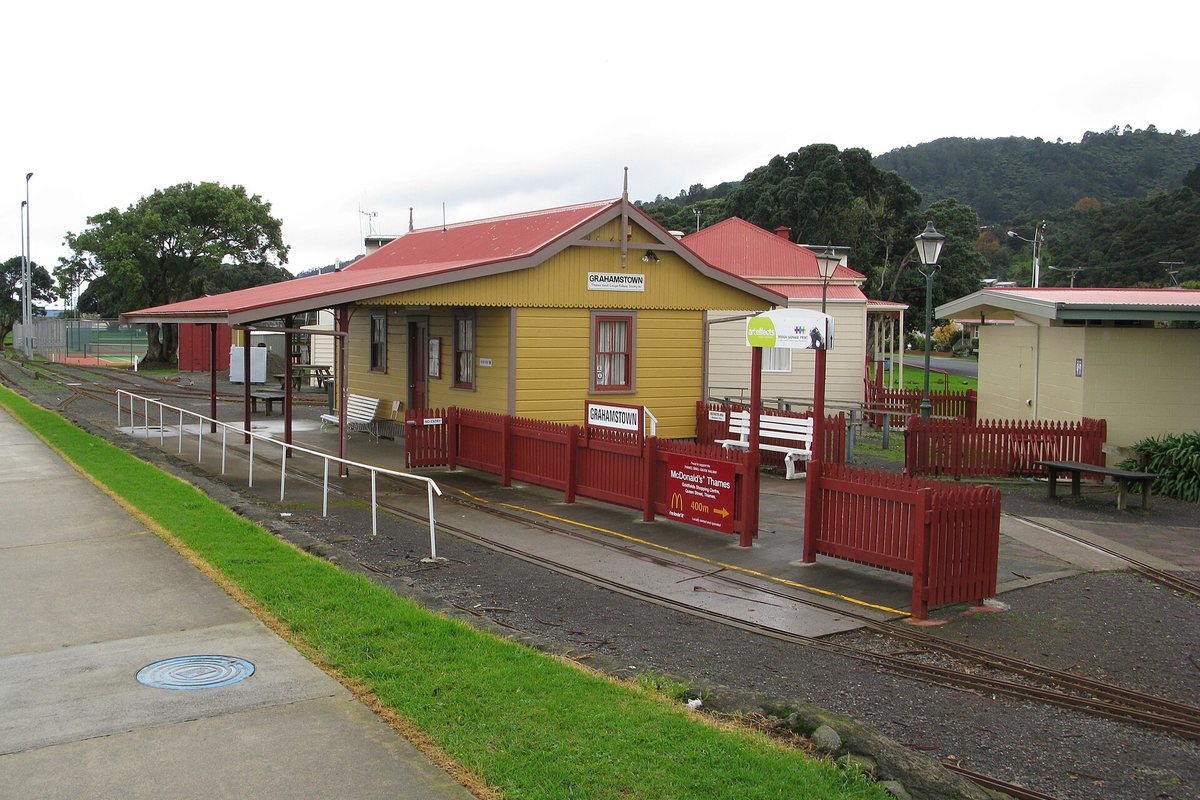
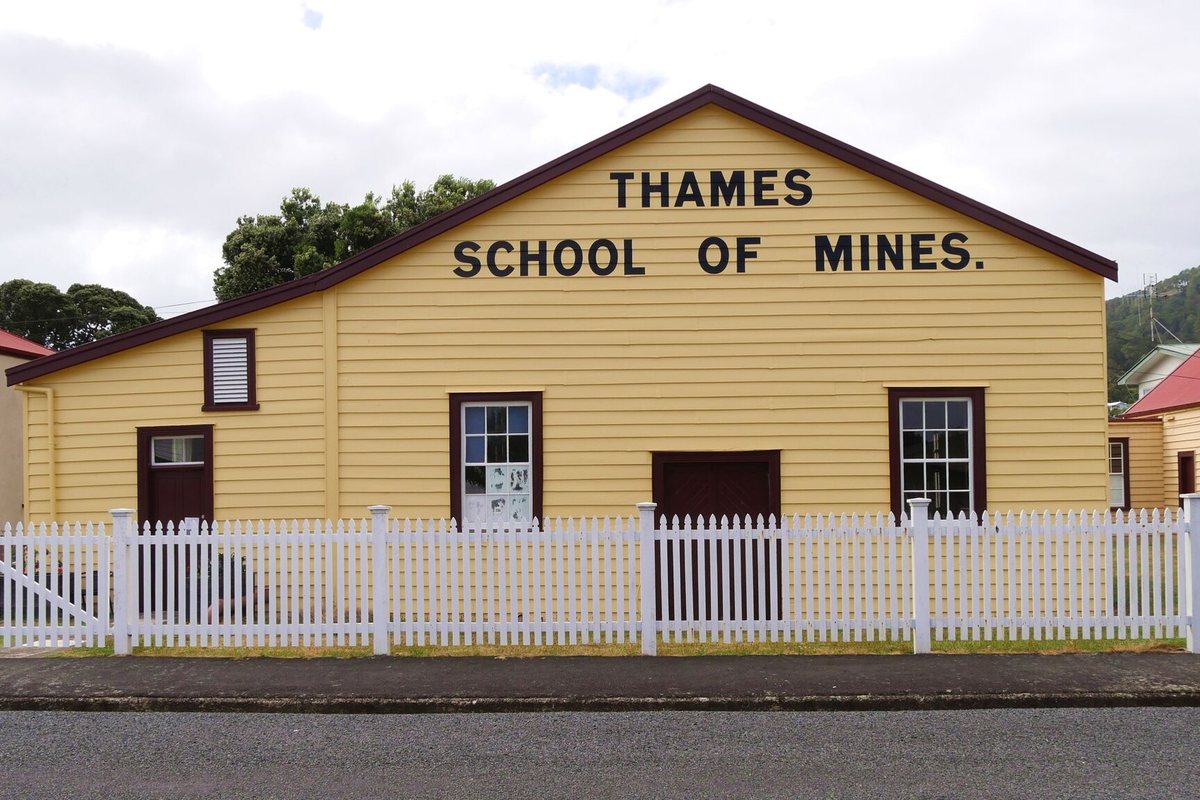
A little further on are the tracks of the Thames Small Gauge Railway and the old Grahamstown Railway Station. Directly opposite the station is the Thames School of Mines, where miners went to learn about rocks. Heritage New Zealand runs it and it is open to the public.
If the gold-rush story grabs you, this is the place for a detour. Head up Cochrane Street to the Thames Museum, then on to the Bella Street Pumphouse, which still holds some of the machinery that pumped water out of the deep mine shafts. Our guide to historic Thames covers the rest of the heritage sites.
When is the best time to see birds on the Firth of Thames?
Go within two hours either side of high tide. The Pūkorokoro Miranda Shorebird Centre gives that advice for the whole Firth: as the tide drops, the birds head far out onto the mudflats to feed, and they are much harder to see.
The birdlife is the reason the Firth of Thames is a Ramsar wetland of international importance. The National Wetland Trust rates it as one of the three most important coastal areas for shorebirds in New Zealand. In spring, bar-tailed godwits, knots and other migrants start arriving from as far away as Siberia and Alaska, and in autumn they fly north again.
Burke Street Wharf and the north end
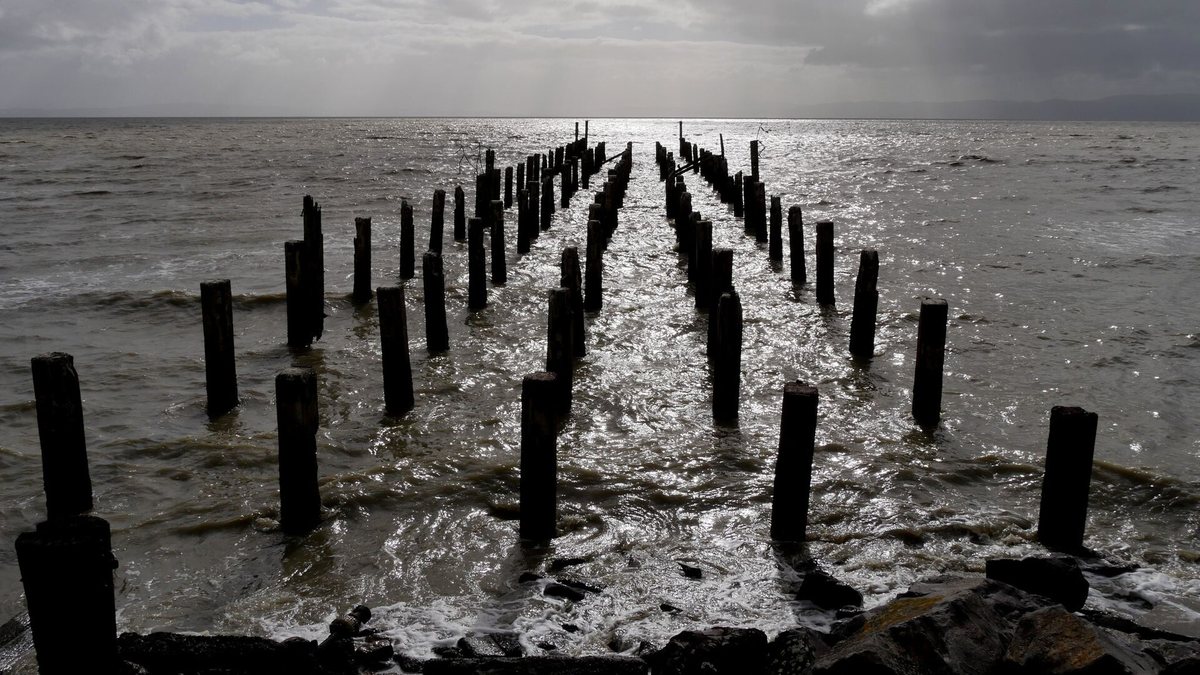
Past Moanataiari, the rows of old pilings at the foot of Burke Street are all that is left of the Burke Street Wharf. The Thames Business Association describes it as a failed project that left the town on the brink of bankruptcy.
From there the path follows the top of the stopbank to Kuranui Bay Reserve, which has a sheltered barbecue, toilets and parking. It makes a good turnaround point or a spot for lunch.
Can you walk the Thames Coastal Walkway as a loop?
Yes. Rather than retracing your steps from Kuranui Bay, follow Tararu Road (State Highway 25) back toward town. It passes the sites of the first big gold find and the richest mine on the Thames goldfield, and it brings you to the Goldmine Experience, where you can tour the mine shafts and see how a stamper battery worked. We cover the tour in our Thames Goldmine Experience guide.
The Thames Sculpture Trail
The walkway also carries part of the Thames Public Art Trust Sculpture Trail. According to The Coromandel's regional tourism listing, the trail follows the 3.5 km coastal path and then the Hauraki Rail Trail for 6.5 km from Shortland Wharf to Kopu, 10 km in all. Look out for an oversized jandal, wind vanes and Michael Smither's Colour Harmonics. If you want to keep going south, our Hauraki Rail Trail guide covers the cycleway.
Tips for walking the Thames waterfront
- Share the path. It gets busy, and bikes, scooters and walkers all use it.
- Keep dogs on a lead until you reach the off-leash park at Moanataiari.
- Check the tide if the bird hide is on your list. High tide is when the birds come close.
- Split it in two by parking at Victoria Park and walking one direction at a time.
- Plan the toilet stop. The facilities are at Kuranui Bay Reserve.
For more walks, from the Kauaeranga Valley to the Pinnacles, see our walks near Thames. The Thames visitor guide has everything else for planning a trip.
Sources: route, facilities and history from The Coromandel regional tourism listing for the Thames Coastal Pathway and the Thames Business Association. Bird hide and wetland details from the National Wetland Trust of New Zealand. Tide advice from the Pūkorokoro Miranda Shorebird Centre. Last checked 2026-09-18.
Frequently asked questions
How long is the Thames Coastal Walkway?
The Thames Coastal Walkway is 3.5 km one way, from Shortland Wharf at the southern end of town to Kuranui Bay Reserve in the north. That makes it 7 km if you walk there and back.
Where do you park for the Thames Coastal Walkway?
Kuranui Bay Reserve at the northern end has parking. You can also park at Victoria Park, roughly in the middle, and walk one section at a time.
Can you take dogs on the Thames Coastal Walkway?
Yes, dogs are allowed on a lead. There is an off-leash dog park at Moanataiari, on the northern part of the route.
Can you cycle the Thames Coastal Walkway?
Yes. The path is shared by walkers, cyclists, rollerbladers, mobility scooters and skateboarders, so keep your speed down and share it with everyone else.
Are there toilets on the Thames Coastal Walkway?
Kuranui Bay Reserve, at the northern end of the walkway, has toilets, a sheltered barbecue and parking.
When is the best time to see birds on the Firth of Thames?
The Pūkorokoro Miranda Shorebird Centre advises visiting within two hours either side of high tide. As the tide drops, the birds move far out onto the mudflats to feed.